Natsproektstroy is training personnel for the construction of high-speed railways
Natsproektstroy, together with the IPED (Institute of Professional Education Development), has held training of college teachers in modern welding procedures. The two-day advanced training program was held in the Federal Technological Cluster in Kaluga.
27 April 2026
Copy link
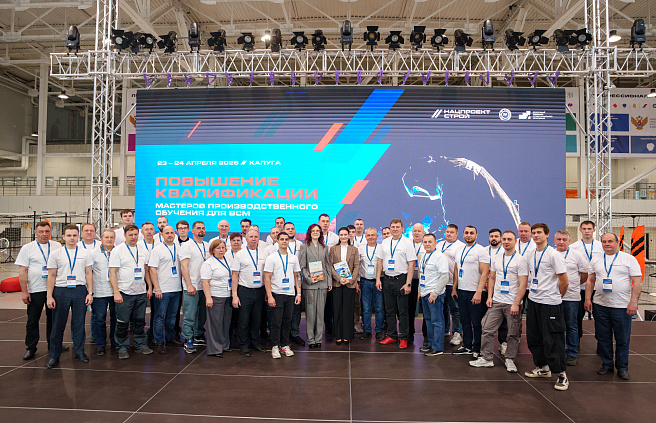
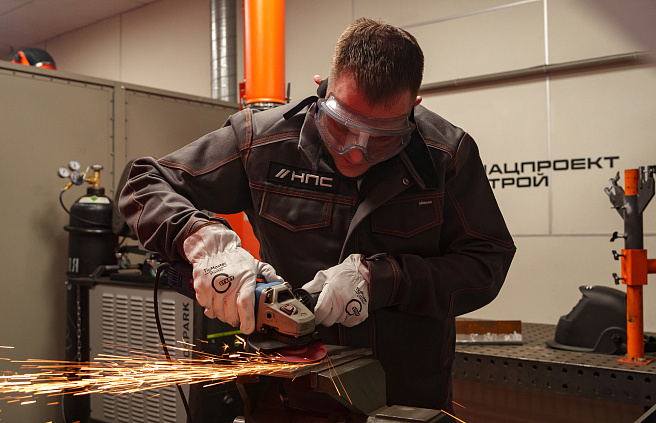
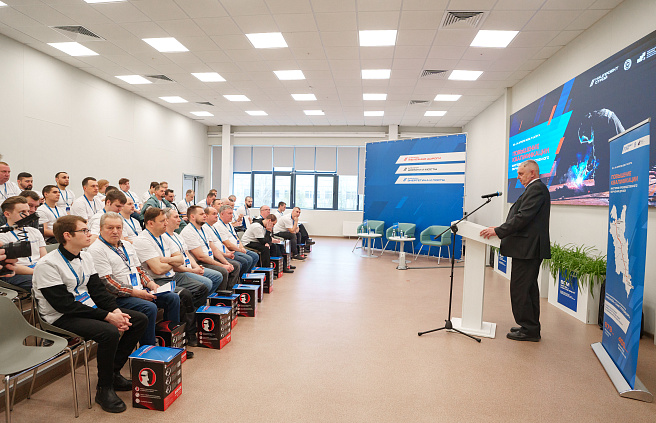
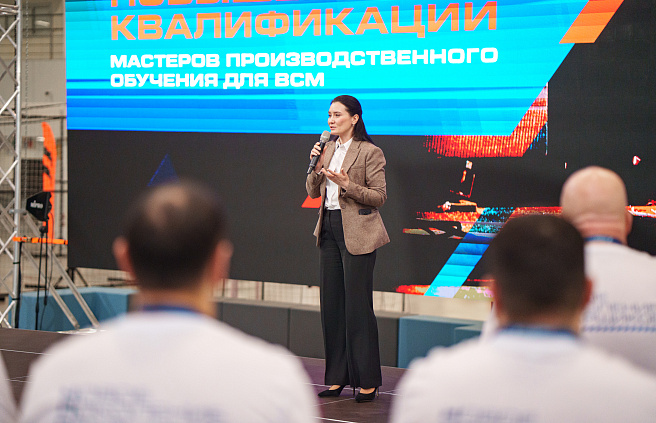
The participants of the program are 40 teachers and on-the-job training foremen from colleges and technical schools of seven subjects of the Russian Federation – Moscow, St. Petersburg, Moscow, Leningrad, Novgorod, Kaluga and Tyumen Regions. The teachers were introduced to up-to-date industrial equipment and the requirements that employers place on college graduates. The specifics of high-speed railway construction were explained to them by the current welding experts of Natsproektstroy Group.
The construction of the first Moscow — Saint Petersburg High-Speed Railway Line involves a great deal of welding. The entire range of welding procedures is used to weld reinforcement and embedded parts of railway structures. The most popular ones are electrical resistance welding by fusing rebars and resistance spot welding of reinforcement.
Automatic submerged arc welding, mechanized flux-cored welding and manual arc tack welding and fillet welding are used for steel superstructures of bridges and overpasses.
Currently, Natsproektstroy employs almost 2,000 welders for the construction of Moscow – St. Petersburg High-Speed Railway, and will continue to recruit. In order to build the high-speed railway, welders must be of the 4th, 5th or 6th grade, must be NAKS-certified and authorized to weld steel bridge structures, item 2 (welding installation procedures).
The construction of the first Moscow — Saint Petersburg High-Speed Railway Line involves a great deal of welding. The entire range of welding procedures is used to weld reinforcement and embedded parts of railway structures. The most popular ones are electrical resistance welding by fusing rebars and resistance spot welding of reinforcement.
Automatic submerged arc welding, mechanized flux-cored welding and manual arc tack welding and fillet welding are used for steel superstructures of bridges and overpasses.
Currently, Natsproektstroy employs almost 2,000 welders for the construction of Moscow – St. Petersburg High-Speed Railway, and will continue to recruit. In order to build the high-speed railway, welders must be of the 4th, 5th or 6th grade, must be NAKS-certified and authorized to weld steel bridge structures, item 2 (welding installation procedures).


