Natsproektstroy Plant in Veliky Novgorod Launches the Russia's First Mass Production of Ballastless Track Slabs for the Moscow – St. Petersburg High-Speed Railway
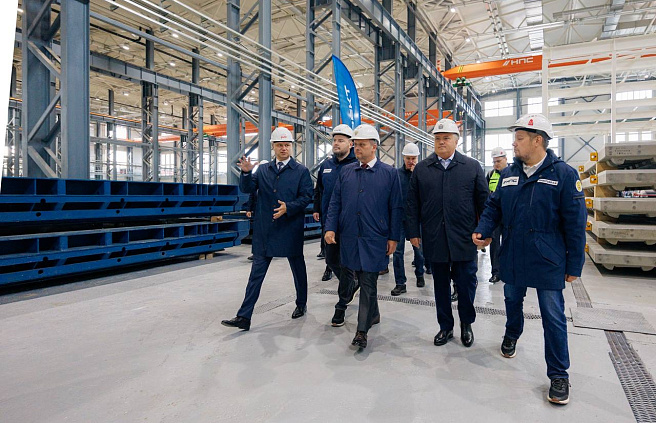
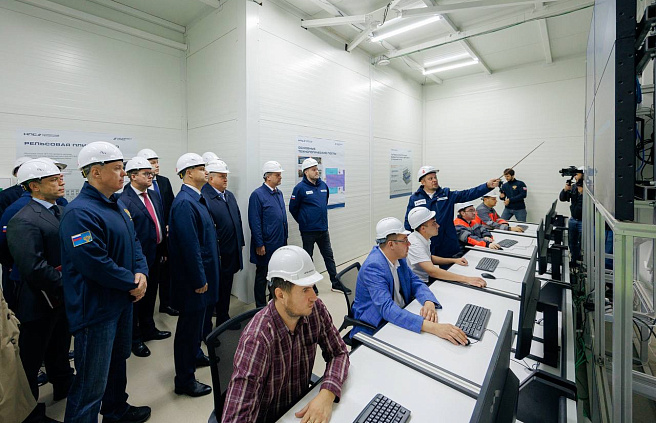
The launch ceremony was attended by Andrei Nikitin, Minister of Transport of the Russian Federation; Oleg Belozerov, CEO and Chairman of the Management Board of Russian Railways; Alexander Dronov, Governor of the Novgorod Region; and Alexey Krapivin, CEO of Natsproektstroy Group.
19 September 2026
Copy link
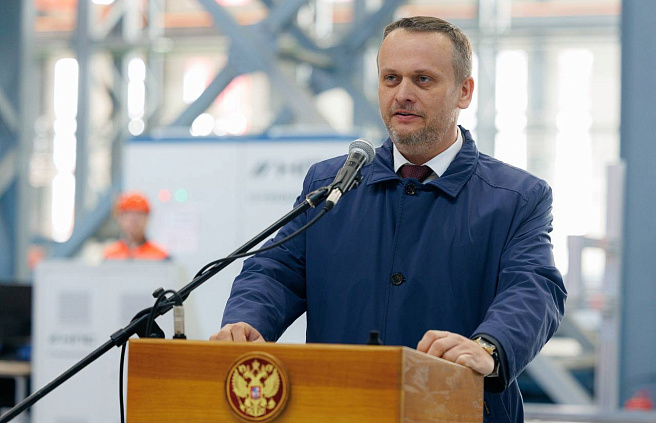
"The high-tech top slab will deliver both traffic safety and the speeds built into the high-speed line. This slab collects data about itself and about traffic, and will be able to share that data for 50 years. In fact, it's a digital tablet made of concrete," Andrei Nikitin stressed.
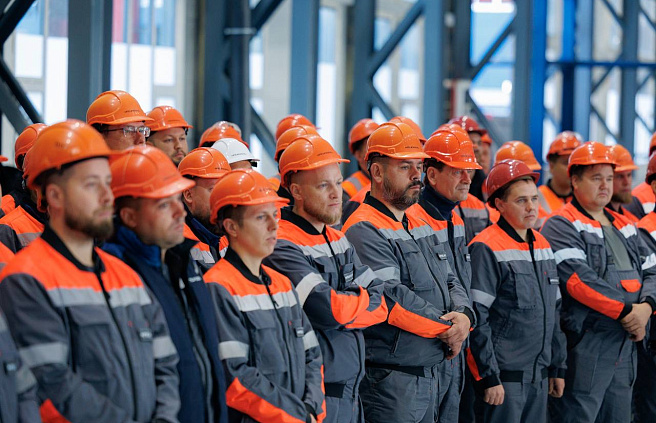
"For us, this means above all new jobs and opportunities. “Local people will have the opportunity to work at a state-of-the-art plant, advance professionally, and build a career here in their home region.” The second aspect is that the production is high-tech and, in many respects, innovative. The most advanced solutions, automation systems, and rigorous quality control are applied here. Facilities like this are raising the standard for the country's entire industry. And, of course, this is a contribution to a major national undertaking. The reliability and safety of train traffic depend on the quality of the slabs that will be produced in the Novgorod Region. That means our region is becoming an important part of the country's entire transport system," said Alexander Dronov.
High-speed rail transit represents a new era in the development of railways in Russia. We have made a giant leap into the future — and what’s more, the future has already become reality today. The plant will produce a special type of slab that will elevate rail traffic to a new level. To use a metaphor, the traditional railway where we use crushed stone is, in a way, the equivalent of a dirt road. And these slabs will enable us to build true railway highways," noted Oleg Belozerov.
"The NPS plant in Veliky Novgorod is a unique facility in terms of form, content, and timing.
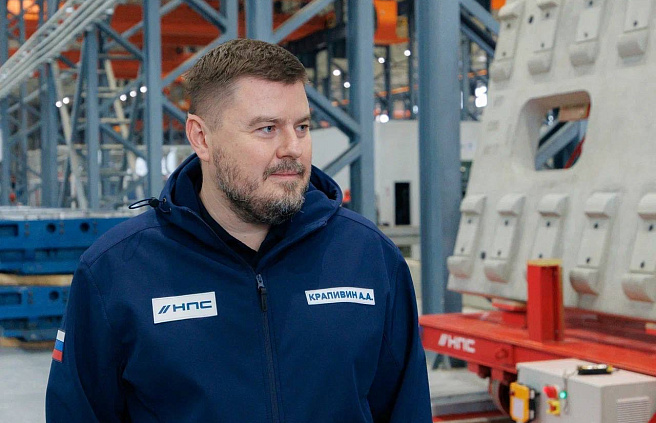
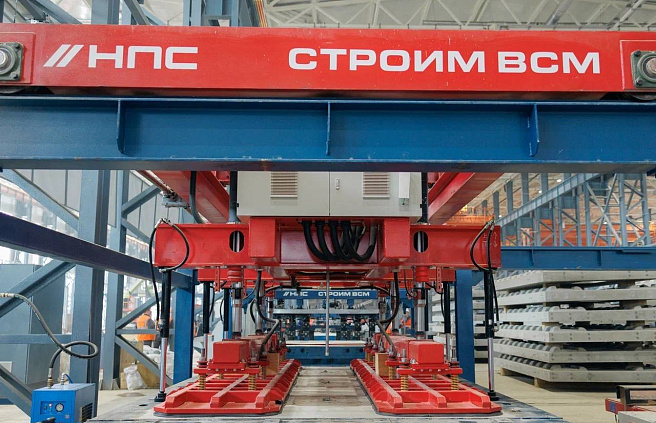
In terms of design, this is a robotic plant that has no equivalents in Russia. In terms of production, the facility will manufacture concrete track slabs for the most sophisticated railway in the country. What is also unique is how quickly the facility was built. The first stone was laid just a year ago, and today the plant is ready for mass production of HSR slabs," said Alexey Krapivin.
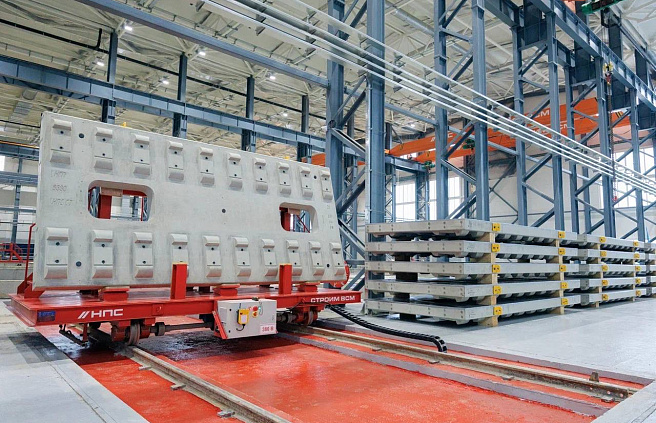
The new plant produces NGP 4.0 reinforced concrete track slabs developed by Natsproektstroy. The composite design incorporates high-strength concrete integrated with an elastic polymer. The solution has no global equivalents and outperforms foreign alternatives in terms of maximum speed limits, operating temperature ranges, and ease of maintenance. The design service life of such a slab is at least 50 years.
The plant's capacity exceeds 100,000 assembly units and over 3.6 million square meters of polymers per year. For comparison, facilities using bench or manual slab molding can only produce about ten thousand units annually.
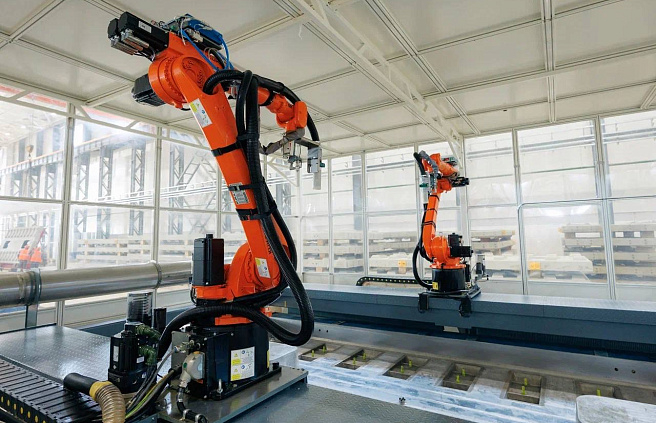
Each day, the plant's two robotic lines will produce around 320 slabs, covering up to two-thirds of the demand of the Moscow – St. Petersburg HSR. Owing to robotized processes, production achieves extreme precision of up to 0.5 mm, with slab dimensions of 5.3 × 2.5 metres and a weight exceeding 7 tonnes.
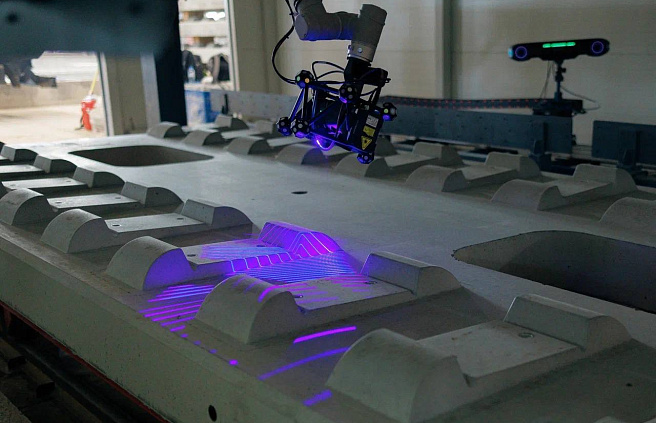
Smart automation system is used at almost every stage: from mold cleaning and concrete placement to polymer application. There are 18 robots for every 900 employees, which is six times higher than the Russian national average of 2.9 robots per 10,000 people. Automatic digital control is in place at every workstation. The geometry of each product is verified with a 3D scanner.
The plant's products will be promptly shipped to construction sites via the railway network.


