Natsproektstroy companies have filled more than 3.3 million cubic meters of rocks to preserve permafrost on Baikal–Amur Mainline
At the second stage of upgrading the Eastern Region, Bamstroymechanizatsiya (part of Natsproektstroy) has filled more than 3.3 million cubic meters of rocks to preserve permafrost on Baikal–Amur Mainline sections. The rockfill maintains sub-zero temperatures at the base of the embankment even in 30-degree heat.
23 June 2026
Copy link
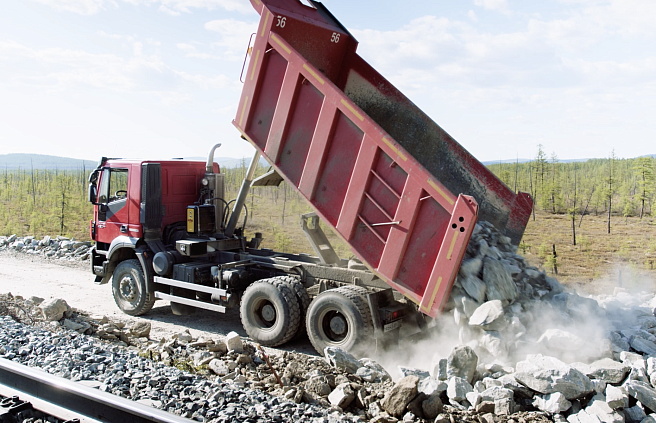
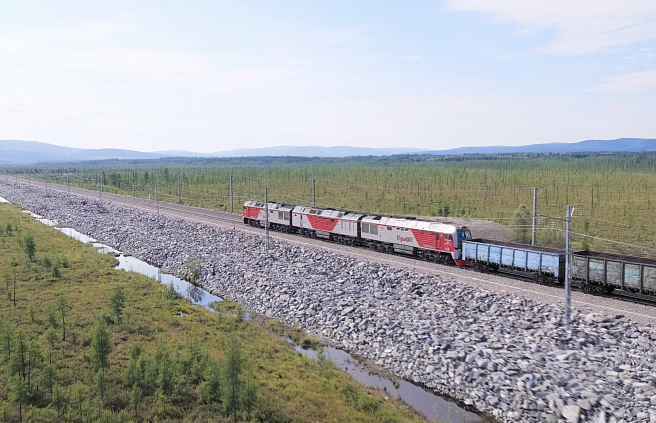
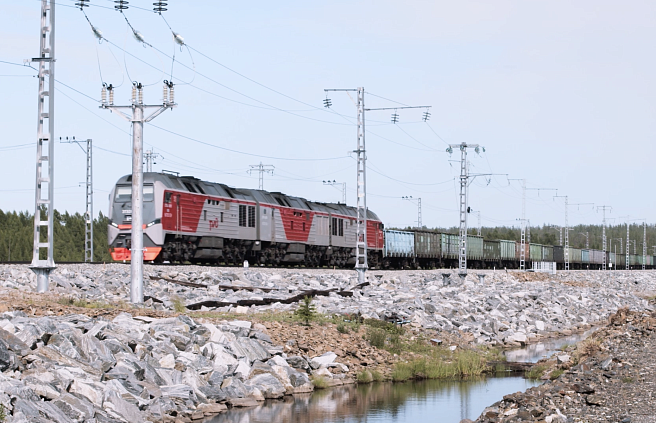
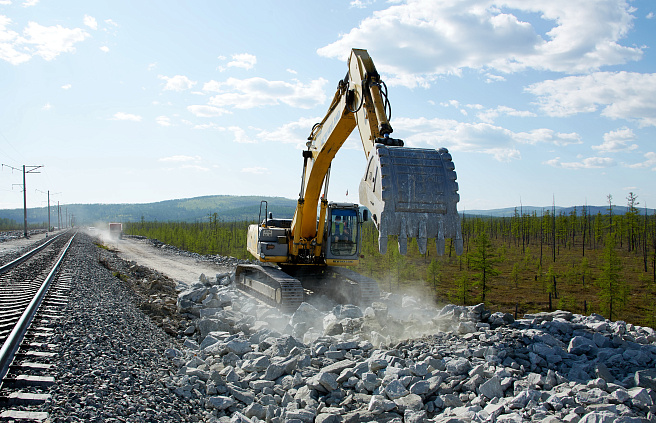
Most sections of Baikal-Amur Mainline pass through permafrost zones. Thawing of such soils creates risks of track subsidence, which is fraught with speed restrictions of trains and constant repairs of the steel gauge. To preserve permafrost during the construction of second tracks, the embankment slopes are covered with a cooling rockfill of a large stone fraction of 20-50 cm.
The soil temperature is regularly monitored by the process engineers of Tynda Permafrost Station. Thermometric rods with sensors are lowered into wells with a depth of 15 meters. In areas with a cooling rockfill, sub-zero temperatures are recorded even in the height of summer. The rockfill design is based on air convection: in winter, cold air flows penetrate between the stones, while warmer and lighter air rises from the embankment.
In summer, the system automatically switches to insulation mode: since cold air is heavier than warm air, it remains trapped in the rockfill layers.
According to the observations of permafrost specialists, the rockfill in combination with drainage ditches and cooling berms helps to restore permafrost. The roadbed is stabilized, minimizing the risk of track subsidence. This reduces restrictions, increases the traffic speed, the weight of trains, and the capacity of Baikal–Amur Mainline.
The soil temperature is regularly monitored by the process engineers of Tynda Permafrost Station. Thermometric rods with sensors are lowered into wells with a depth of 15 meters. In areas with a cooling rockfill, sub-zero temperatures are recorded even in the height of summer. The rockfill design is based on air convection: in winter, cold air flows penetrate between the stones, while warmer and lighter air rises from the embankment.
In summer, the system automatically switches to insulation mode: since cold air is heavier than warm air, it remains trapped in the rockfill layers.
According to the observations of permafrost specialists, the rockfill in combination with drainage ditches and cooling berms helps to restore permafrost. The roadbed is stabilized, minimizing the risk of track subsidence. This reduces restrictions, increases the traffic speed, the weight of trains, and the capacity of Baikal–Amur Mainline.


