NPS/BSM Kuryan Plant Expands Inert Materials Sales Geography
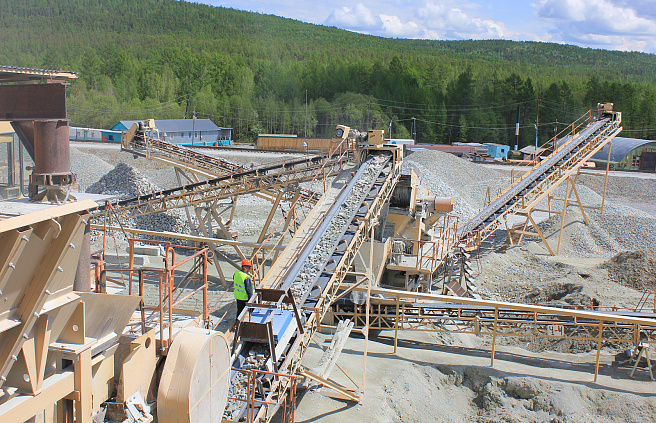
The Kuryan plant located in Tynda and operated by Bamstroy mekhanizatsiya (a subsidiary of Natsproektstroy) boosts crushed stone sales. In the first six months of 2026, the plant produced 128,000 cubic meters of crushed stone. Inert materials are loaded into railcars and dump trucks and moved hundreds of kilometers from the capital of the Baikal-Amur Mainline (BAM).
28 July 2026
Copy link
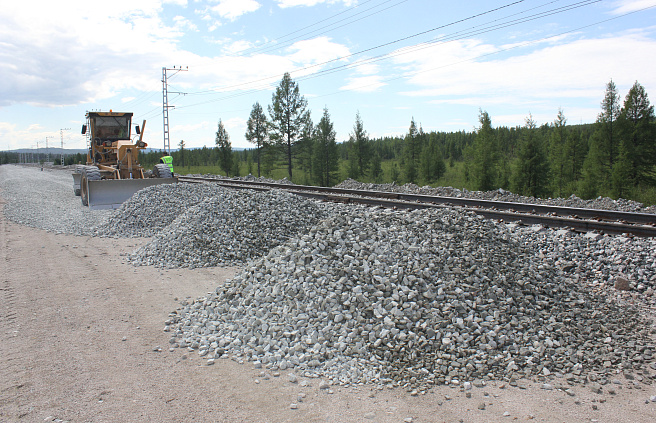
Russian Railways subsidiaries are among the largest consumers of ballast crushed stone. Stone of 25–60 mm fraction is used for track repair on the Eastern Polygon. Approximately 40% of the plant's total output is supplied to BAM line sections.
The most remote destination for Tynda-produced crushed stone is in the Yakutsk area. There, it is being used for the construction of a bridge crossing over the Lena River. Another northern project is the South Yakutsk TPP in Neryungri, which is being built by Natsproektstroy companies.
The Krasnoyarsk Reinforced Concrete Plant is purchasing stone for power grid projects.
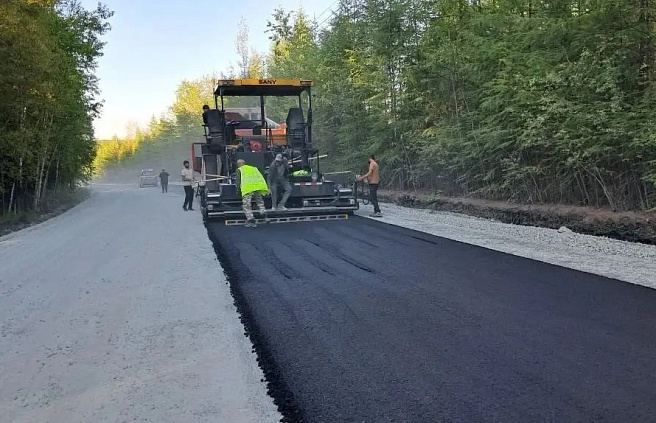
In Tynda, crushed stone is supplied to sites with ongoing overhaul of heating and water supply networks — here, 5–20 mm stone is used. Road repairs in Tynda receive crushed stone in three fraction sizes. For the leveling course installed prior to asphalt paving, contractors use a crushed stone–sand mix, while the asphalt itself requires narrower-graded stone ranging from 4 to 22 mm.
Due to their unique properties, Kuryan plant products are in high demand in the Far North regions. The frost-resistant aggregate maintains its strength for over a century, even under extreme temperature fluctuations.
The most remote destination for Tynda-produced crushed stone is in the Yakutsk area. There, it is being used for the construction of a bridge crossing over the Lena River. Another northern project is the South Yakutsk TPP in Neryungri, which is being built by Natsproektstroy companies.
The Krasnoyarsk Reinforced Concrete Plant is purchasing stone for power grid projects.
In Tynda, crushed stone is supplied to sites with ongoing overhaul of heating and water supply networks — here, 5–20 mm stone is used. Road repairs in Tynda receive crushed stone in three fraction sizes. For the leveling course installed prior to asphalt paving, contractors use a crushed stone–sand mix, while the asphalt itself requires narrower-graded stone ranging from 4 to 22 mm.
Due to their unique properties, Kuryan plant products are in high demand in the Far North regions. The frost-resistant aggregate maintains its strength for over a century, even under extreme temperature fluctuations.


